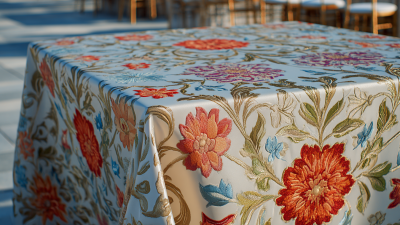
How to Choose the Right Tablecloth Size?
Choosing the right tablecloth size can transform an ordinary table into a polished dining setting. In my experience, many sizing mistakes begin with guessing. A cloth may look elegant online, yet hang awkwardly at home. Accurate measurements create a better result.
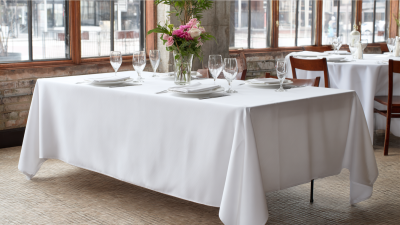
Tablecloth Sizing starts with the table’s length, width, or diameter. Measure the tabletop, not the chairs or decorative frame. Then decide the preferred drop, which is the fabric hanging over each edge. A 6- to 10-inch drop suits casual meals. A 10- to 15-inch drop feels more formal. For weddings or floor-length displays, measure from the tabletop to the floor. Add twice that distance to the table dimensions.
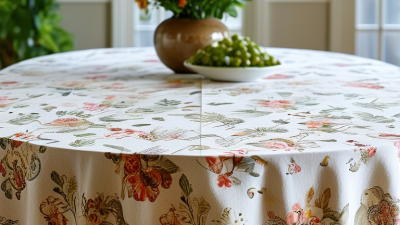
Shape matters too. A round cloth can soften a square table, but its corners may hang unevenly. Rectangular tables need matching proportions. Oval tables often require careful checking, especially when their ends are unusually narrow. Fabric thickness, washing shrinkage, and hemmed edges also affect the final fit. Small details matter.
Consider the occasion.
A family breakfast may need practical clearance. A banquet setting may require a dramatic drop. Measure twice. I once trusted a listed table size and ignored its thick edge; the cloth fell shorter than expected. That mistake was avoidable. Reliable sizing combines measurements, fabric information, and the intended atmosphere. When those details align, the tablecloth protects the surface, supports comfortable seating, and makes the entire room feel thoughtfully prepared.
Identify Your Table’s Shape and Exact Dimensions
How to Choose the Right Tablecloth Size?
Identify Your Table’s Shape and Exact Dimensions
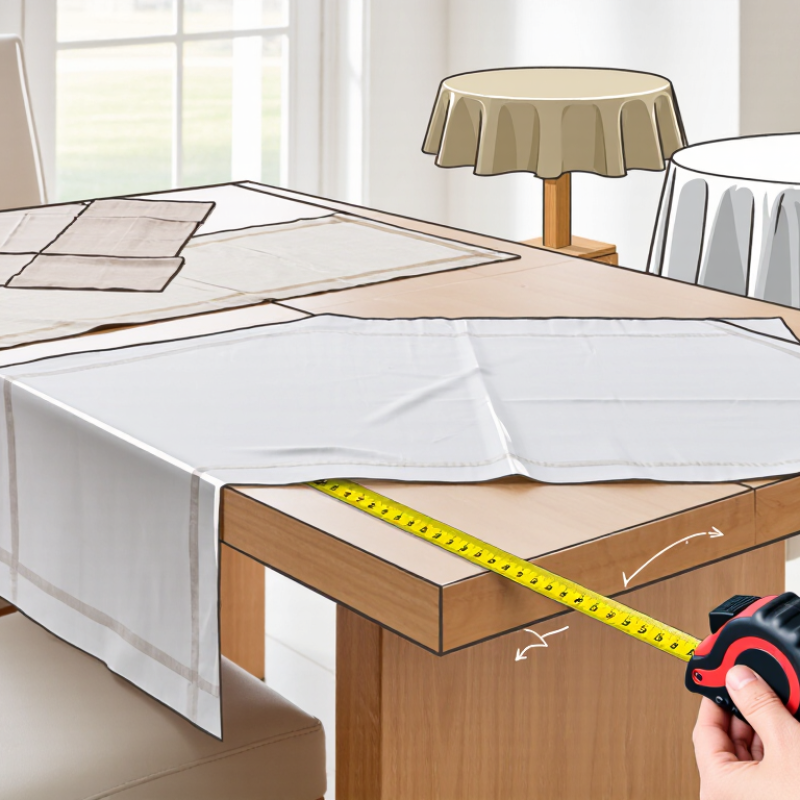
Start by identifying your table’s shape: rectangular, square, oval, or round. Use a firm tape measure, not a flexible ruler. Measure the tabletop length and width at the widest points. For a round table, record its diameter across the center. Measure the table with extension leaves installed if you plan to cover it during larger meals.
Do not guess. Small errors become obvious at the corners. I once measured only the tabletop’s central section and bought a cloth that pulled tightly near the ends. That mistake taught me to check the full surface and note its thickness. Write down every measurement before shopping.
Add your preferred drop to each side. A casual drop often measures 6 to 10 inches, while a more formal setting may need 10 to 15 inches. Use these formulas: table length plus twice the drop, and table width plus twice the drop. For round tables, add twice the drop to the diameter. Check chair clearance afterward. A cloth that reaches the floor may catch on chair legs or brush against guests’ knees. Fabric shrinkage can also affect the final fit, especially after washing, so allow a small margin when the care instructions are uncertain.
Measure the Tablecloth Drop You Want on Each Side
Choosing the right tablecloth begins with the drop you want on each side. Measure the tabletop length and width first. Then add twice the desired drop to both measurements. A 60-by-36-inch table with a 10-inch drop needs an 80-by-56-inch cloth. Keep a tape measure flat, not angled.
For everyday dining, a 6-to-10-inch drop usually looks neat and leaves chairs moving freely. A 12-to-15-inch drop feels more formal. For weddings or banquet tables, the cloth may reach the floor.
Check the table height before ordering. Standard dining tables are often about 28 to 30 inches high, but folding tables can differ. I once assumed two “standard” tables matched. They did not. The cloth dragged on one side.
Industry data also supports careful textile selection. The IMARC Group’s 2024 table linen market analysis places the global market above 10 billion U.S. dollars, reflecting demand across restaurants, hotels, and events. That scale does not make sizing easier. It makes accurate measuring more important. The wrong drop creates wrinkles, exposed legs, or a cloth that catches on shoes. Fabric thickness matters too. Heavier cotton or linen can hang slightly differently after washing. Allow a small tolerance, perhaps one or two inches. Recheck after laundering. Measurements can change.
Calculate the Ideal Tablecloth Length and Width
How to Choose the Right Tablecloth Size?
Calculate the Ideal Tablecloth Length and Width
Start by measuring the tabletop, not the existing cloth. Record the full length and width in inches or centimeters. For a rectangular table, use this formula: table length plus twice the desired drop equals cloth length. The same calculation applies to the width. A practical dining drop is usually 8 to 12 inches on each side. For a more formal setting, 15 to 20 inches may look better, but it can brush against guests’ knees.
For example, a table measuring 60 by 36 inches needs a cloth about 84 by 60 inches with a 12-inch drop. Check both dimensions carefully. A cloth that is long enough but too narrow will expose the table edges. For a round table, add twice the drop to its diameter. A 48-inch table with a 10-inch drop needs a 68-inch round cloth. Measure twice.
I once chose a cloth using only the table length, and the corners looked awkward. That small mistake changed how I measure now. Consider the table’s shape, leg placement, and chair clearance before buying. Thick fabric may hang differently after washing, especially if it contains natural fibers. Allow a little extra length for shrinkage, but avoid excessive fabric near children or walkways. A slightly shorter drop often works better than a beautiful cloth that keeps sliding.
How to Choose the Right Tablecloth Size?
Use this chart to compare common banquet table dimensions with the recommended tablecloth size. The calculations assume a 12-inch drop on every side.
Formula: Tablecloth length or width = table length or width + twice the desired drop. For example, a 72 × 30 inch table with a 12-inch drop requires a 96 × 54 inch tablecloth.
Match the Size to the Occasion and Table Setting
Choosing the right tablecloth size starts with the occasion, not only the table dimensions. A relaxed breakfast looks better with a 6–8-inch drop. A formal dinner usually needs a 12–15-inch drop. For floor-length styling, add about 30 inches on each side. This creates a softer, more polished setting, but it can hinder guests in narrow spaces.
The guest count also changes the best choice. The Knot’s 2023 Real Weddings Study reported an average wedding size of 115 guests. Large celebrations often use banquet tables, where consistent cloth drops make the room feel organized. The National Restaurant Association’s 2024 report projected more than $1 trillion in restaurant sales. That figure reflects how strongly dining experiences matter, including visual details such as table presentation. Still, a perfect measurement can fail when chairs, serving dishes, or uneven floors are ignored.
Tips: Measure the tabletop first, then add twice the desired drop. For a 60-inch round table with a 15-inch drop, choose a 90-inch round cloth. Test one setting before ordering many pieces. I once preferred floor-length cloths for elegance, but they felt awkward during active family meals. Sometimes a shorter drop works better. Leave enough space for plates and elbows, especially when using runners, centerpieces, or buffet service.