Leave Your Message

China Top Fitted Tablecloth Suppliers for Global Buyers?

Choosing China’s top Fitted Tablecloth suppliers takes more than comparing prices. Global buyers need to assess fabric weight, stitching, sizing accuracy, print consistency, and packaging. A sample can look crisp under showroom lights, yet fit poorly on a real table. Measure carefully.

Ask suppliers for material specifications, clear size charts, production photos, and sample terms. Check how elastic edges are finished and whether corners stay secure after repeated use. For outdoor events, stain resistance and easy cleaning may matter more than a glossy product image. For hospitality buyers, repeatable color and dependable restocking often carry greater value.

An expert quotation should be verified before publication. Suggested wording for a confirmed specialist: “[Insert an approved comment on fit, fabric, or supplier quality].” — [Verified Fitted Tablecloth expert’s name]. This keeps the advice useful without presenting an invented quotation as fact.

This guide will compare suppliers by product range, customization options, quality controls, communication, and export experience. It will also flag questions buyers should ask before placing a bulk order. No supplier is right for every project. A low quote may hide thin fabric, loose seams, or unclear sampling costs. That deserves a second look.
China Top Fitted Tablecloth Suppliers for Global Buyers?

What Defines a Fitted Tablecloth? Measure the Table and Plan a 15–30 cm Drop

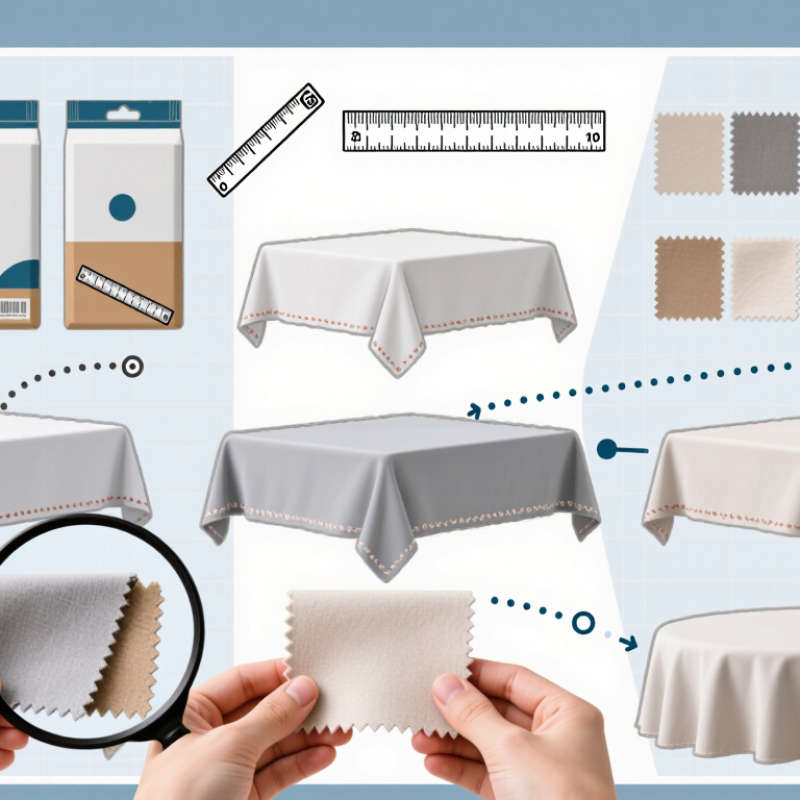
A fitted tablecloth is cut to match a tabletop and its sides, with shaped or sewn corners that help it sit neatly. Start by measuring the table’s length, width, and height; do not estimate from an old cloth, which may have stretched or shrunk. For a rectangular table, add twice the planned drop to both top dimensions.

A 180 × 90 cm table with a 20 cm drop needs a cloth about 220 × 130 cm. Simple math. For round tables, measure the diameter and add twice the drop.

A 15–30 cm drop suits many everyday dining tables: 15 cm keeps fabric clear of knees, while 30 cm gives fuller side coverage. Check chair height and apron depth before choosing; a long drop can catch on seats.

Fabric behavior matters, too. ISO 6330:2021 specifies domestic washing and drying procedures used to assess textile dimensional change, but it does not set one universal shrinkage rate. Ask suppliers for wash-test results on the actual fabric, then remeasure after laundering when possible. This step is easy to skip. It is also where a precise fit can go wrong.
How China’s Supplier Base Fits the Market: Table Linen Under HS 6302

China Top Fitted Tablecloth Suppliers for Global Buyers?

How China’s Supplier Base Fits the Market: Table Linen Under HS 6302

HS 6302 groups bed, table, toilet, and kitchen linen in international trade data. UN Comtrade lets buyers compare exports and imports within this category, but it does not isolate fitted tablecloths. That distinction matters. A supplier’s HS code alone cannot confirm fabric weight, fit, or finishing quality.

China offers a broad production base, from woven polyester table covers to cotton-rich blends and custom sizing. The WTO reported that world merchandise trade volume fell 1.2% in 2023, a reminder that demand and freight conditions can shift. Buyers should compare quotations against fabric specifications, minimum order quantities, lead times, and sample results—not price alone. Ask for measurements after washing, seam details, and colorfastness evidence. Small checks matter.

Trade data has limits. HS 6302 combines several linen products, so reported values do not show fitted-tablecloth sales specifically. This is not a perfect shortcut. A practical sourcing review pairs UN Comtrade or ITC Trade Map data with factory audits and pre-shipment inspection. Even then, measurements can vary slightly between batches; record tolerances in the purchase specification.

Which Fabrics and Finishes Meet ISO 12947-2 Abrasion-Test Requirements?

For fitted tablecloths, abrasion resistance depends on the fabric, its construction, and the buyer’s test specification. ISO 12947-2 describes a Martindale method for assessing fabric breakdown under rubbing. It does not set one universal pass count for every tablecloth. Buyers should agree on the test pressure, endpoint, and required number of cycles before comparing samples. Ask for a report from a competent textile laboratory, not just a supplier’s claim. That matters.

Polyester and polyester-cotton fabrics are common options because tightly woven constructions can resist everyday friction. Still, fiber content alone cannot predict performance. Check yarn density, fabric weight, and the way the surface is finished. A smooth finish may reduce snagging, while a heavy coating can crack or wear unevenly with repeated use. No finish is magic. Request testing on the actual finished fabric, since dyeing, coating, or other treatments may change its behavior.

For a fitted style, also inspect seams and elastic after use; the Martindale result does not evaluate the complete garment. One detail is easy to miss: test results only help when the sample matches the production fabric. Recheck specifications if the mill changes yarns or finishes.

How to Verify Suppliers: Check ISO 105-C06 Wash Colorfastness Results

When comparing fitted tablecloth suppliers, ask for the complete ISO 105-C06 wash colorfastness report, not just a “pass” claim. The test assesses how textile color changes and stains adjacent material during washing under specified conditions. Check the procedure used, wash temperature, detergent, and number of cycles. Small details matter. A result from one condition may not predict performance under another.

Confirm that the report identifies the tested fabric, color, sample number, and test date. Compare the ratings for color change and staining, and ask which acceptance level your order requires. A dark tablecloth may show fading differently from a pale one. Request evidence that the sample matches the production fabric, not a similar swatch. Photos after washing can help, but they do not replace the report. I would not treat one clean result as the whole story: repeat testing, fabric batches, and actual care routines can vary. ISO 105-C06 results are useful evidence, not a guarantee of identical results in every customer’s wash.

China Top Fitted Tablecloth Suppliers for Global Buyers? — How to Verify Suppliers: Check ISO 105-C06 Wash Colorfastness Results
Verification Dimension What to Check in the Test Report How to Interpret It Buyer’s Record
Test standard The report identifies ISO 105-C06, including the edition used and the applicable laundering test condition. ISO 105-C06 covers colour fastness to domestic and commercial laundering. The selected condition should match the buyer’s intended care and use requirements. Record the standard edition and test-condition code shown on the report.
Tested product and sample identity Product description, fabric composition, colour or print, sample code, and any relevant finish or treatment. Confirm that the report covers the same fabric and colourway as the fitted tablecloth being quoted. Results for a different shade or construction may not represent the offered product. Match the report’s sample details to the approved product sample and purchase specification.
Test condition The specific ISO 105-C06 procedure and test parameters are stated, rather than only “tested to ISO 105-C06.” Different laundering conditions can produce different results. Check that the reported condition is suitable for the intended washing and care instructions. Record the condition and compare it with the buyer’s stated care requirements.
Colour change A rating for the change in colour of the tested specimen after laundering, commonly assessed using the ISO 105-A02 grey scale. The grey scale runs from grade 1 (greatest change) to grade 5 (no visible change under the assessment method); half grades may be reported. The required grade should be set in the product specification. Record the reported grade and the buyer’s required minimum.
Colour staining Separate staining ratings for relevant adjacent multifibre or other specified materials, commonly assessed using the ISO 105-A03 grey scale. The grey scale runs from grade 1 (greatest staining) to grade 5 (no visible staining under the assessment method); half grades may be reported. Check each reported material and the buyer’s limits. Record the ratings by material and compare them with the buyer’s specification.
Laboratory and report traceability Laboratory name, report number, test date, sample receipt or identification details, and authorized report approval. Traceable report details make it possible to confirm the report’s source and connect the results to the tested sample. Verify report details with the issuing laboratory when needed.
Pass criteria The buyer’s required minimum ratings and applicable care conditions are stated separately from the measured results. ISO 105-C06 provides a test method; it does not establish one universal pass grade for every tablecloth or buyer. Acceptance limits should be agreed in the purchase specification. Compare each measured result with the agreed acceptance criteria before approval.
Evidence limitation Request a report for the relevant product sample; do not rely only on a supplier’s general claim of “wash fastness” or a report for another fabric or colour. This table is a verification checklist, not a supplier ranking or a set of laboratory results. Actual performance must be confirmed from a traceable test report. File the report with the approved sample and order documentation.

How to Compare Quotes: Assess MOQ, Sample Lead Time, and Incoterms 2020

When comparing quotes from fitted tablecloth suppliers, check whether each price covers the same fabric, size, and elastic design. A 180-by-75-centimeter table cover in 180 gsm polyester is not comparable to a lighter fabric with a deeper pocket. Confirm whether dimensions describe the tabletop or the finished cover. Small wording differences can change the fit.

Tips: Record each supplier’s MOQ, sample lead time, and bulk production time in one sheet. Ask whether sample charges are refundable against an order. Request a physical sample when color, stitching, or fabric stretch matters. Photos help, but they cannot show how firmly an elastic edge holds a corner.

Review Incoterms 2020 alongside the quote. Under FOB, clarify the named port and who handles costs after goods are loaded; under DAP, confirm the named delivery place and which import charges remain yours. Compare the total landed cost, not just the unit price. Also ask how cartons are packed and labeled. One supplier may offer a lower MOQ but a longer sample wait, which can delay approval. There is no perfect quote. If a detail feels vague, ask for it in writing before paying a deposit.